Cash flow is rarely a quiet problem. It shows up in subtle ways first. A delayed supplier payment here, a paused hiring plan there. Then one day, despite strong sales, you find yourself asking a simple but uncomfortable question… why does growth feel so tight?
Across the UK, late payments remain one of the biggest pressures on SMEs. According to government-backed reports, billions of pounds are tied up in unpaid invoices at any given time. That is not a revenue problem. It is a timing problem.
And timing is exactly what the right funding solution fixes.
So, when it comes to Loans vs Invoice Finance vs Asset Finance, the decision is less about preference and more about aligning funding with how your business actually operates.
The Hidden Cost of Choosing the Wrong Funding
Here’s something many business owners realise a bit too late. Funding is not just about access to money. It shapes how confidently you can make decisions.
Pick the wrong option, and you might:
- Commit to repayments before revenue lands
- Limit your ability to scale when demand spikes
- Tie up working capital that could have driven growth
Pick the right one, and things feel different. You stop reacting and start planning.
Business Loans: Reliable Structure, Limited Flexibility

Traditional business loans have been the backbone of SME funding for decades. They are simple in principle. Borrow a fixed amount, repay it over an agreed term with interest.
Where loans shine
- Funding expansion with clear ROI, like opening a second location
- Covering one-time costs such as refurbishments or large inventory orders
- Businesses with predictable, steady income streams
The reality behind the numbers
Interest rates and approval criteria have tightened in recent years, especially for smaller firms without long trading histories. Lenders want reassurance. That often means strong credit profiles, consistent revenue, and sometimes personal guarantees.
The trade-off
Repayments begin regardless of how your cash flow behaves. If a key client delays payment, the loan still expects its due.
For stable businesses, that predictability is comforting. For others, it can feel restrictive.
Invoice Finance: Funding That Moves at the Speed of Your Sales
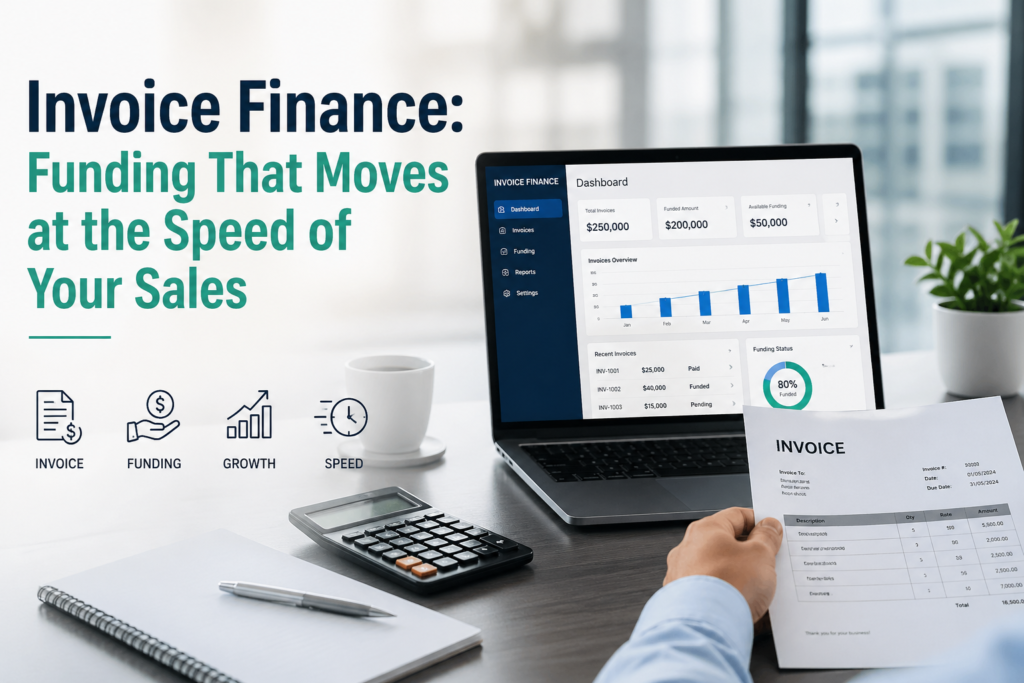
Many UK SMEs operate on credit terms. You deliver the work today but get paid weeks later. That gap can quietly slow everything down.
This is where Invoice finance becomes powerful.
Instead of waiting for payments, you unlock up to 90 percent of the invoice value almost immediately.
Why it works so well for growing businesses
- Cash flow improves without increasing traditional debt
- Funding scales naturally with your turnover
- You gain breathing room to pay staff, suppliers, and invest in growth
Understanding your options
- Invoice Factoring: The provider manages collections, which can save time but changes how payments are handled
- Invoice discounting: You stay in control of your client relationships, often preferred by established firms
What many don’t consider
Late payments are not just inconvenient. They can limit your ability to take on new work. Invoice finance flips that dynamic. Instead of waiting, you move forward with confidence.
For businesses in sectors like construction, recruitment, or wholesale, this can be the difference between stagnation and steady growth.
Asset Finance: Unlocking Growth Without Sacrificing Liquidity
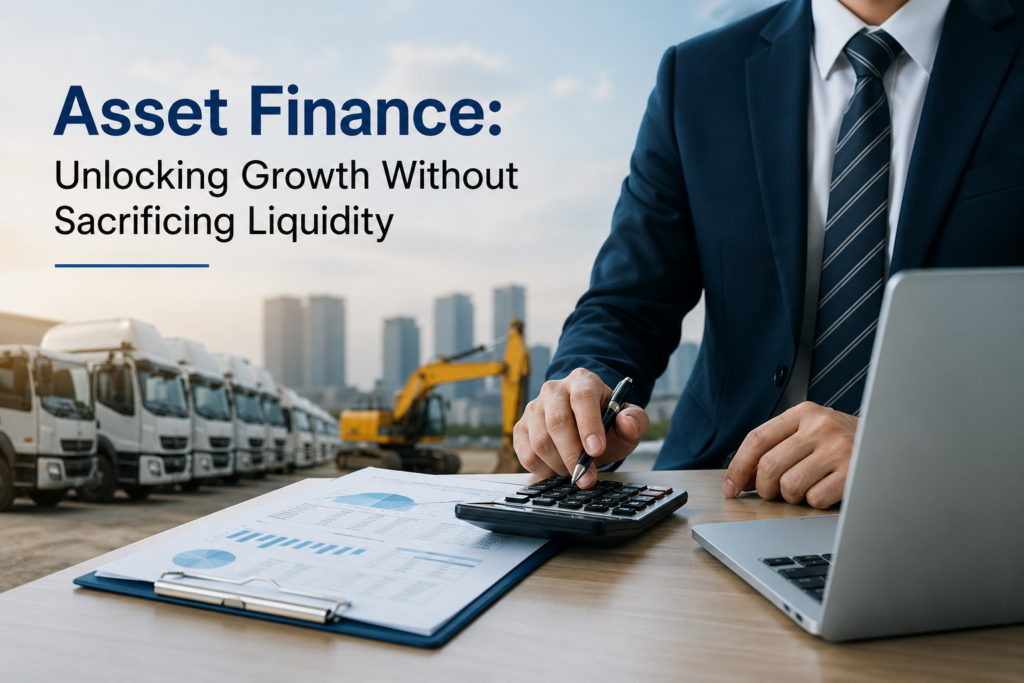
Growth often requires equipment. Vehicles, machinery, technology upgrades. These are not optional. They are essential.
Paying upfront, however, can drain capital you might need elsewhere.
That is where Asset Finance earns its place.
Why businesses lean towards asset finance
- Spreads the cost of expensive assets over time
- Keeps working capital intact for daily operations
- Often secured against the asset, making approval more accessible
Practical example
A logistics company wants to expand its fleet. Paying outright could freeze cash flow for months. With asset finance, they acquire vehicles immediately and repay gradually as those vehicles generate revenue.
The nuance
Different structures exist, from hire purchase to leasing. Some lead to ownership, others focus purely on usage. Choosing the right structure matters just as much as choosing the funding itself.
Loans vs Invoice Finance vs Asset Finance: What Really Sets Them Apart?
| Factor | Business Loans | Invoice Finance | Asset Finance |
| Funding Style | Fixed lump sum | Ongoing cash tied to invoices | Linked to asset purchase |
| Cash Flow Impact | Can tighten cash flow | Actively improves liquidity | Protects existing cash |
| Flexibility | Limited | Highly flexible | Moderately flexible |
| Risk Level | Higher if income fluctuates | Lower as it follows sales | Secured against assets |
A Thought That Often Changes the Decision
Many business owners approach funding with a single-solution mindset. One loan, one facility, one answer.
But real-world businesses are rarely that simple.
A manufacturer might use Invoice finance to stabilise cash flow, Asset Finance to upgrade machinery, and a small loan for short-term expansion. Each tool serves a purpose.
That layered approach often creates resilience. It spreads risk while improving agility.
Making the Right Choice for Your Business
Before deciding, ask yourself a few grounded questions:
- Is your biggest challenge delayed payments or lack of demand?
- Do you need flexibility or predictability?
- Are you funding growth, or simply managing gaps?
The answers usually point you in the right direction.
And if they don’t, that’s where expert guidance becomes valuable.
Funding Should Feel Like Momentum, Not Pressure
The right funding option does not just solve a problem. It changes how your business moves.
It gives you the confidence to say yes to opportunities.
It removes the hesitation around spending where it matters.
It turns growth from a risk into a plan.
At The Best Group, the focus is not on pushing a product. It is about understanding how your business works and matching it with funding that supports that rhythm.
If your cash flow feels tighter than it should, it might not be a revenue issue at all. It might simply be time to rethink how your business is funded.
FAQs
1. Which funding option is best for improving cash flow quickly?
Ans. Invoice finance is often the fastest way to improve cash flow, as it releases funds tied up in unpaid invoices.
2. Are business loans harder to get in the UK today?
Ans. Yes, lending criteria have become stricter, especially for newer or smaller businesses without strong credit histories.
3. Does asset finance require a deposit?
Ans. In many cases, yes, but some agreements offer low or no upfront costs depending on the asset and lender.
4. Is invoice finance suitable for small businesses?
Ans. Absolutely. It is widely used by SMEs, particularly those dealing with long payment cycles.
5. Can combining funding options reduce financial risk?
Ans. Yes. Using a mix of solutions can balance cash flow, reduce dependency on one source, and improve financial flexibility.
Discover the Latest Trends
Stay informed with our latest articles and resources.